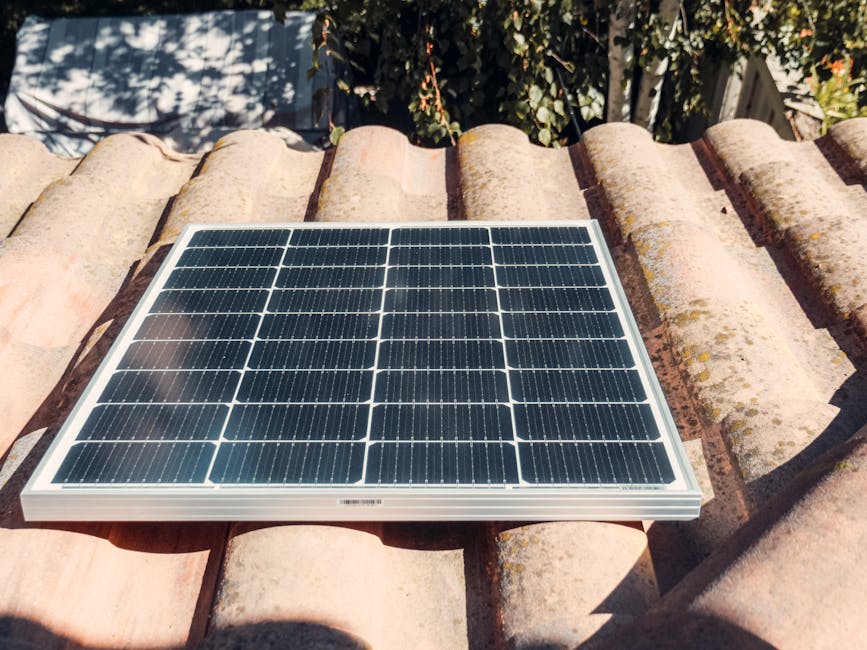
Efficiency of Perovskite Solar Cells
Efficiency of Perovskite Solar Cells
Perovskite solar cells have emerged as a promising alternative to traditional silicon-based photovoltaics, offering high efficiency and low production costs. Their unique crystal structure allows them to absorb a broader spectrum of sunlight, translating into superior energy conversion rates. This blog post explores the efficiency of perovskite solar cells, the factors influencing their performance, and the potential for future advancements in this technology.
Understanding Perovskite Materials
Perovskite refers to a class of materials that share a specific crystal structure, which can accommodate various compositions. The most commonly used perovskite material in solar cells is methylammonium lead halides (MAPbX3, where X can be iodine, bromine, or chlorine). These materials have demonstrated remarkable light absorption properties and can be processed from solution, making them cost-effective.
Efficiency Breakthroughs
The efficiency of perovskite solar cells has significantly improved since their inception. In 2009, the first perovskite solar cell achieved an efficiency of just 3.8%. As of 2023, efficiencies have surpassed 25%, making them competitive with traditional silicon solar cells. This rapid improvement is attributed to various factors:
- Material Composition: Researchers are continuously experimenting with different compositions of perovskite materials to optimize their efficiency.
- Layer Engineering: The architecture of the solar cell, including the use of electron and hole transport layers, significantly impacts the overall efficiency.
- Stability Enhancements: Advances in material stability have led to more durable perovskite cells, ensuring consistent performance over time.
Factors Affecting Efficiency
Several factors can influence the efficiency of perovskite solar cells:
- Light Absorption: The ability of the perovskite layer to absorb light efficiently is crucial. Optimizing the thickness and composition of the layer can enhance absorption rates.
- Charge Carrier Mobility: High mobility of charge carriers (electrons and holes) is essential for efficient charge collection and reduces recombination losses.
- Defect Density: Reducing defects within the perovskite layer can minimize non-radiative recombination, improving overall efficiency.
Comparing Perovskite and Silicon Solar Cells
While silicon solar cells have been the industry standard for decades, perovskite solar cells are closing the efficiency gap. Here’s a comparison:
- Efficiency: Perovskite cells have achieved efficiencies over 25%, while the best silicon cells are around 26-27%. However, the potential for further enhancement in perovskite cells remains high.
- Cost: The production of perovskite cells is generally cheaper and less energy-intensive than silicon cells, potentially leading to lower prices for consumers.
- Flexibility: Perovskite solar cells can be made flexible, opening new applications in building-integrated photovoltaics and portable devices.
Challenges and Future Directions
Despite their impressive efficiencies, perovskite solar cells face several challenges before they can dominate the market:
- Stability: Long-term stability under environmental conditions remains a significant hurdle. Research is focusing on encapsulation techniques and stable materials to enhance longevity.
- Toxicity: The presence of lead in many perovskite formulations raises environmental and health concerns. Developing lead-free alternatives is a priority for researchers.
- Scalability: While lab-scale efficiencies are high, translating these results to large-scale production and deployment is an ongoing challenge.
Conclusion
The efficiency of perovskite solar cells presents a transformative opportunity for the solar energy landscape. With continued research and development, overcoming current challenges could lead to a new era of affordable, efficient, and sustainable solar energy. Engineers and researchers must collaborate to harness this potential, ensuring that perovskite technology reaches its full capability in contributing to global energy needs.