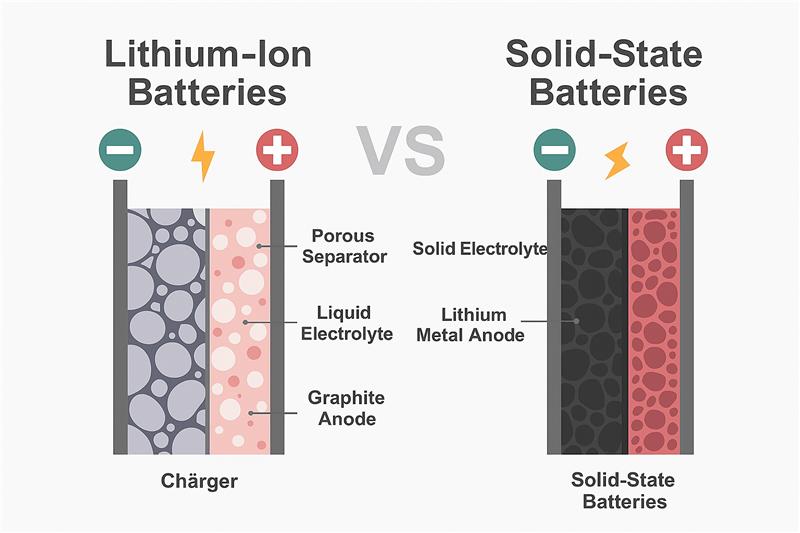
Lithium-Ion vs Solid-State Batteries
Lithium-Ion vs Solid-State Batteries: A Comparative Analysis for Engineers
In the quest for efficient energy storage solutions, lithium-ion batteries have been the go-to technology for several years. However, the emergence of solid-state batteries is reshaping the landscape of energy storage systems. This article aims to provide engineers with a detailed comparison between these two battery technologies, highlighting their advantages, disadvantages, and potential applications.
Understanding Lithium-Ion Batteries
Lithium-ion (Li-ion) batteries are rechargeable energy storage devices that utilize lithium ions as the primary charge carriers. They have gained widespread usage in portable electronics, electric vehicles (EVs), and grid storage systems.
- Components: Consists of an anode (typically graphite), a cathode (commonly lithium cobalt oxide or lithium iron phosphate), and an electrolyte solution (liquid).
- Advantages:
- High energy density, allowing for compact designs.
- Well-established manufacturing processes and supply chains.
- Rapid charging capabilities.
- Disadvantages:
- Safety concerns due to thermal runaway and flammability of the electrolyte.
- Limited lifespan due to degradation of components over time.
- Environmental concerns related to lithium extraction and recycling.
Exploring Solid-State Batteries
Solid-state batteries represent a significant advancement in battery technology, utilizing a solid electrolyte instead of a liquid one. This innovation promises to enhance safety, energy density, and lifespan.
- Components: Composed of a solid electrolyte, a cathode, and an anode. The solid electrolyte can be made from various materials, including ceramics or polymers.
- Advantages:
- Increased safety due to the absence of flammable liquids, reducing the risk of fire and explosion.
- Higher energy density compared to traditional Li-ion batteries, facilitating lighter and smaller designs.
- Longer lifespan owing to reduced degradation of materials.
- Disadvantages:
- Higher manufacturing costs and complexity, which can hinder scalability.
- Challenges in achieving good ionic conductivity at room temperature.
- Limited availability of materials and components in large-scale production.
Performance Comparison
When comparing lithium-ion and solid-state batteries, several performance metrics are crucial:
- Energy Density: Solid-state batteries can achieve up to 50-100% higher energy density than traditional Li-ion batteries, allowing for longer-lasting applications.
- Safety: The solid electrolyte in solid-state batteries significantly reduces risks associated with leakage and combustion.
- Charging Speed: While Li-ion batteries can be charged quickly, solid-state batteries are expected to match or exceed these speeds as technology advances.
- Lifespan: Solid-state batteries tend to maintain performance over a more extended period, with fewer cycles leading to degradation.
Applications and Future Prospects
Both lithium-ion and solid-state batteries have their niches in various applications:
- Lithium-Ion: Dominates consumer electronics, electric vehicles, and renewable energy storage.
- Solid-State: Emerging applications in electric vehicles, aerospace, and next-generation consumer electronics, where high energy density and safety are paramount.
The future of battery technology is undoubtedly heading towards solid-state solutions, but lithium-ion batteries will continue to play a significant role in the immediate future. Engineers must stay informed about advancements in both technologies to make informed decisions in product design, development, and deployment.
Conclusion
In summary, while lithium-ion batteries have served as the backbone of modern energy solutions, solid-state batteries are poised to revolutionize the industry with their superior safety and performance characteristics. The ongoing research and development in solid-state technology could provide a sustainable pathway for the future of energy storage systems.