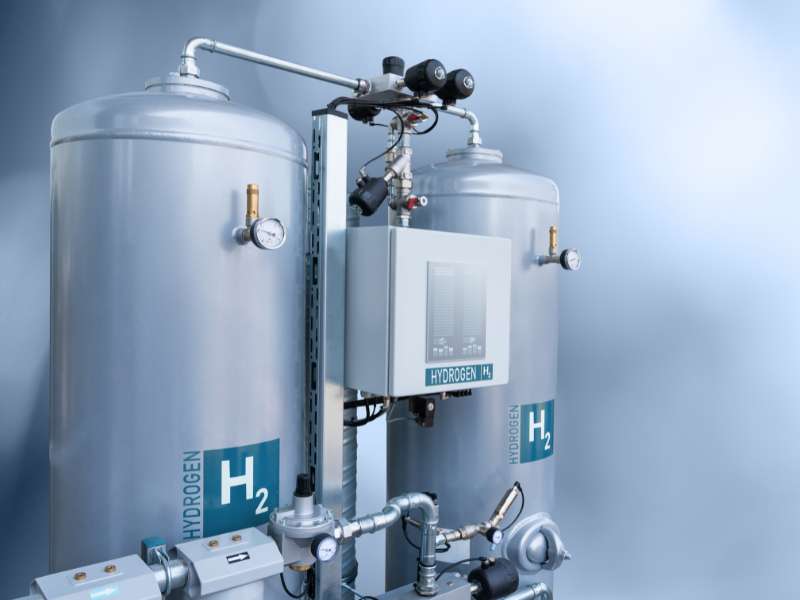
PEM Electrolyzer for Green Hydrogen Production
PEM Electrolyzer for Green Hydrogen Production
As the world increasingly shifts towards sustainable energy solutions, green hydrogen has emerged as a key player in the quest for carbon neutrality. One of the most efficient technologies for producing green hydrogen is the Proton Exchange Membrane (PEM) electrolyzer. This article delves into the working principles, advantages, and applications of PEM electrolyzers in hydrogen production.
Understanding PEM Electrolyzers
PEM electrolyzers utilize a solid polymer electrolyte to conduct protons while separating the gases produced in the process of electrolysis. The basic reaction involves the splitting of water (H2O) into hydrogen (H2) and oxygen (O2) gases through an electrochemical reaction.
How PEM Electrolyzers Work
The operation of a PEM electrolyzer can be broken down into several key components and steps:
- Anode Reaction: At the anode, water is oxidized, releasing protons and oxygen. The reaction can be represented as follows:
2 H2O → 4 H+ + 4 e– + O2
- Proton Exchange: The protons generated migrate through the PEM to the cathode, while the electrons travel through an external circuit, generating electrical power.
- Cathode Reaction: At the cathode, protons combine with electrons to form hydrogen gas:
4 H+ + 4 e– → 2 H2
Advantages of PEM Electrolyzers
PEM electrolyzers offer several benefits that make them suitable for green hydrogen production:
- High Efficiency: PEM electrolyzers are known for their high current density and efficiency, typically ranging from 60% to 80%.
- Compact Design: Their small footprint and modular design allow for easy integration into various systems, making them ideal for both large-scale and decentralized applications.
- Fast Response Time: PEM electrolyzers can quickly adjust to changes in load, making them suitable for intermittent renewable energy sources such as solar and wind.
- Purity of Hydrogen: The hydrogen produced is of high purity, making it suitable for various applications, including fuel cells and industrial processes.
Applications of PEM Electrolyzers
PEM electrolyzers are versatile and can be used in various sectors:
- Renewable Energy Storage: PEM electrolyzers can store excess energy generated from renewable sources by converting it into hydrogen, which can be later used to generate electricity or as fuel.
- Industrial Applications: Hydrogen produced through PEM electrolyzers can be used in chemical processes, metallurgy, and as a reducing agent in various industrial applications.
- Transportation: The hydrogen fuel produced can be utilized in fuel cell vehicles, offering a zero-emission alternative to traditional fossil-fuel-based transportation.
- Power Generation: Hydrogen can be used in gas turbines or fuel cells to generate electricity, providing a clean energy solution for grid applications.
The Future of PEM Electrolyzers
As technology advances, the efficiency and cost-effectiveness of PEM electrolyzers are expected to improve. Research and development efforts are focusing on enhancing membrane materials, catalysts, and system designs to further increase performance and reduce costs.
In conclusion, PEM electrolyzers represent a promising technology for the sustainable production of green hydrogen. Their advantages in efficiency, compactness, and response time make them an excellent choice for harnessing renewable energy and supporting the transition to a cleaner energy future.