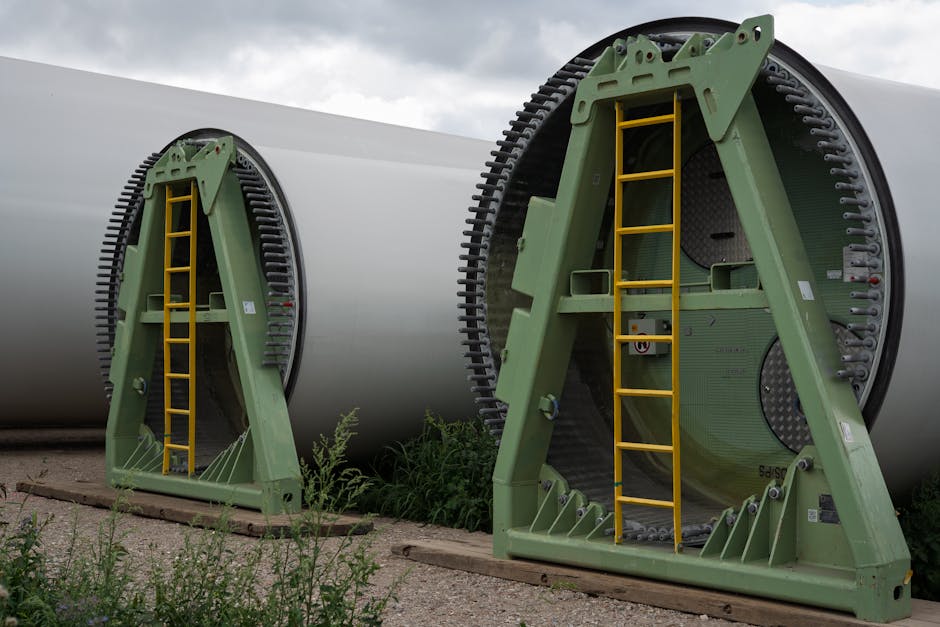
Wind Turbine Blade Aerodynamics Analysis
Wind Turbine Blade Aerodynamics Analysis
Wind turbines play a crucial role in renewable energy generation, and their efficiency largely depends on the design and aerodynamics of their blades. Understanding the aerodynamic performance of wind turbine blades is essential for optimizing energy capture and improving overall turbine design. In this article, we will explore the fundamental concepts of wind turbine blade aerodynamics analysis, including the key factors influencing blade performance, common analysis methods, and the significance of computational fluid dynamics (CFD) in this field.
Key Factors Influencing Blade Performance
The aerodynamic performance of wind turbine blades is influenced by several key factors:
- Blade Shape: The airfoil shape of the blade affects its lift and drag characteristics. Designers often optimize the blade profile for maximum efficiency at specific wind speeds.
- Angle of Attack: The angle at which the wind strikes the blade determines the lift and drag forces acting on it. A proper angle of attack is crucial for maximizing energy extraction.
- Reynolds Number: The flow regime around the blade can significantly impact its performance. The Reynolds number, a dimensionless quantity, helps predict the flow characteristics over the blade surface.
- Wind Speed: The speed of the wind directly influences the aerodynamic forces experienced by the blades, affecting their overall performance and energy output.
- Surface Roughness: The texture of the blade surface can influence the boundary layer development and, consequently, the lift and drag forces.
Common Analysis Methods
Engineers employ various methods to analyze the aerodynamics of wind turbine blades:
- Wind Tunnel Testing: Physical models of turbine blades are tested in wind tunnels to gather empirical data on lift, drag, and pressure distribution.
- Theoretical Analysis: Analytical methods, such as Blade Element Momentum (BEM) theory, provide a simplified approach to predict blade performance based on aerodynamic principles.
- Computational Fluid Dynamics (CFD): CFD simulations offer detailed insights into the flow behavior around blades, allowing for comprehensive analysis and optimization of blade designs.
Significance of Computational Fluid Dynamics (CFD)
CFD has become an indispensable tool in wind turbine blade aerodynamics analysis. It enables engineers to simulate complex flow patterns and visualize the aerodynamic forces acting on the blades. Here are some advantages of using CFD:
- Detailed Flow Visualization: CFD allows for visualization of velocity fields, pressure distributions, and turbulence, providing a deeper understanding of the aerodynamic performance.
- Performance Optimization: By iterating design modifications in CFD simulations, engineers can optimize blade shapes for improved performance before physical prototypes are built.
- Cost-Effectiveness: CFD reduces the need for extensive physical testing, saving time and resources in the design process.
Conclusion
In conclusion, wind turbine blade aerodynamics analysis is vital for enhancing the efficiency of wind energy systems. By understanding the key factors that influence blade performance and utilizing advanced analysis methods such as CFD, engineers can design blades that maximize energy capture while minimizing drag. As the demand for renewable energy continues to grow, the importance of aerodynamics analysis in wind turbine design will only increase, paving the way for more efficient and sustainable energy solutions.